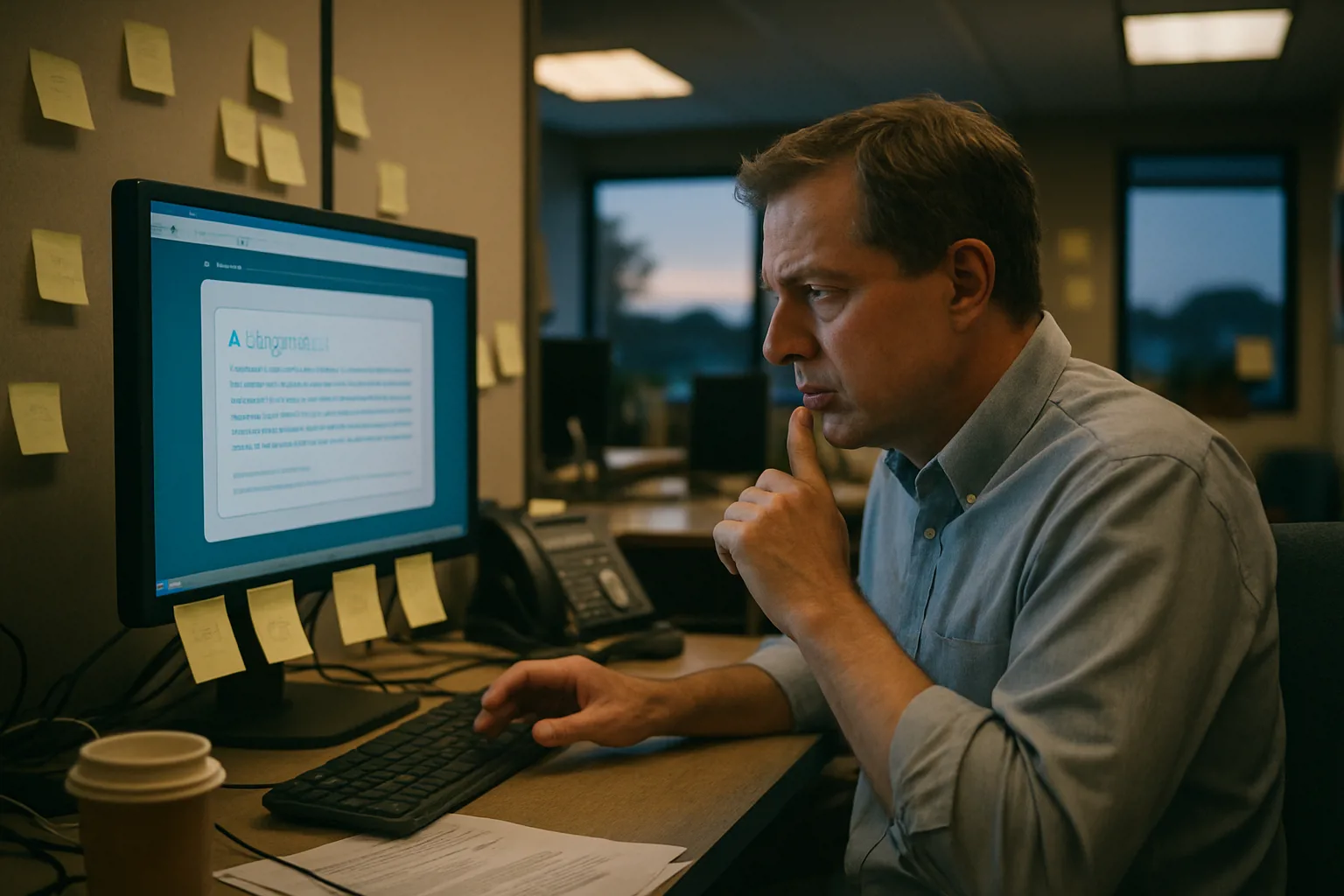
Despite the hype, most people aren't clamoring for more AI features in their daily routines. Recent surveys reveal deep-seated skepticism, trust issues, and a strong call for responsible regulation—contrary to the assumptions driving much of today’s product development.
- Most consumers are wary or indifferent about adopting new AI features.
- Public trust in AI remains low, even as usage grows.
- Regulation and fair distribution of AI’s benefits are top public concerns.
- Businesses benefit by prioritizing user trust and thoughtful, human-centered AI design.
Silicon Valley keeps adding artificial intelligence to everything, but outside of tech circles, there’s little evidence that the general public wants more AI intruding into their lives. As skepticism grows and trust remains low, it’s time to question the myth that everyone is hungry for the next AI-driven feature.
Public Skepticism: The Real AI Adoption Story
Contrary to the enthusiasm in boardrooms and product meetings, most Americans approach AI with caution. A 2026 Pew Research Center study found that while AI tools like chatbots and smart assistants are familiar, a majority worry about their rapid development and potential to harm society. Just because these tools are available doesn't mean people want more of them.
- 61% predict AI will negatively impact society
- Most feel AI advances are happening too quickly
- Many fear risks to privacy and personal information
This skepticism is not confined to older generations. According to a 2026 Gallup survey, only 22% of 14- to 29-year-olds said they were excited about AI—a sharp decline from 36% the previous year.
Trust Issues: The Elephant in the Room
Trust is the missing ingredient in the AI adoption recipe. Despite widespread exposure, over three-quarters of people rarely or only sometimes trust AI, according to a 2026 Quinnipiac University poll. This trust deficit persists even as AI becomes more visible in everyday products and services.
“For most people, more AI means more uncertainty—not more excitement.”
AI’s perceived lack of transparency, unpredictable errors, and complex decision-making processes make users hesitant to delegate important tasks or decisions to algorithms. It’s not that people reject the technology outright—they just don’t trust it yet.
Workplace AI: Hype Meets Reality
In the professional world, the story is similar. While executives may tout productivity gains, Gallup data shows that nearly half of U.S. workers never use AI on the job. Among those who do, many see little practical benefit in daily workflows.
Pilot Programs Reveal Practical Challenges
A recent longitudinal study at a state Department of Transportation piloting Microsoft’s Copilot found that initial excitement faded quickly. After just eight weeks, employees rated the usefulness of AI tools significantly lower than at the start, citing limited applicability and unclear benefits. This suggests that the learning curve and mismatch with real-world needs often outweigh the promised efficiencies.
| AI in the Workplace | Expectation | Reality |
|---|---|---|
| Productivity Boost | High automation, less busywork | Marginal gains, new complexities |
| Seamless Integration | Works with existing tools | Compatibility headaches |
| User Satisfaction | Positive feedback | Skepticism, frustration |
AI Regulation and Public Priorities
Far from wanting more AI, most Americans are calling for stricter governance and fairer distribution of AI’s economic benefits. A June 2026 Verasight survey found that 69% of U.S. adults support requiring major AI companies to transfer half their equity into a public fund—an unprecedented level of support for a policy designed to rein in tech power and ensure broader benefit.
- 69% support public wealth fund proposals
- 65% of Massachusetts voters are more worried about AI’s harm than potential benefits
- Regulation is seen as essential for safety and economic stability
This regulatory mood signals a growing desire to slow down AI’s advance, prioritize transparency, and make sure the technology serves the public good, not just corporate profits.
For Businesses: Why Listening to Users Pays Off
For companies and creators, these trends are a wake-up call. The gap between what developers want to build and what people actually want or trust is wider than ever.
- Start with empathy: Design AI features that solve genuine user problems, not just what’s possible with new tech.
- Be transparent: Explain how AI works and what data it uses. Transparency is the first step to building trust.
- Offer control: Give users the ability to opt out or adjust AI features, rather than forcing adoption.
- Monitor real-world impact: Gather feedback, measure satisfaction, and be willing to pivot if features aren’t landing well.
Businesses that listen and adapt to users’ legitimate concerns about AI will not only avoid backlash—they’ll build lasting loyalty in a skeptical market. Responsible, user-centered AI isn’t just good ethics. It’s good business.
Frequently Asked Questions
Why are people skeptical about more AI in their daily lives?
Surveys show that people worry about privacy, job security, and the pace of AI development, with many fearing potential negative impacts on society.
Is AI adoption growing in the workplace?
While some businesses are adding AI tools, overall workplace adoption appears to be stagnating, with many employees questioning the usefulness and reliability of these technologies.
Do younger people want more AI features?
Enthusiasm for AI among younger generations has declined sharply, with fewer seeing AI as exciting or beneficial compared to previous years.
What kind of AI regulations do people support?
Most support stricter governance of AI companies, including proposals to ensure the wealth generated by AI is more equitably distributed and that safety is prioritized.
Sources
- Americans' Views on AI Chatbots, Smart Devices and AI's Impact | Pew Research Center
- As more Americans adopt AI tools, fewer say they can trust the results | TechCrunch
- Gen Z's fading AI hype
- Is AI adoption at work flatlining? This major survey thinks so - but it's definitely not the end just yet
- Persona Migration and Expectation Recalibration in Generative AI Adoption: A Longitudinal Study at a State Department of Transportation
- More and more US employees back forcing AI companies to transfer half of their stock into a public wealth fund
- Mass. is worried about AI, but most still use it