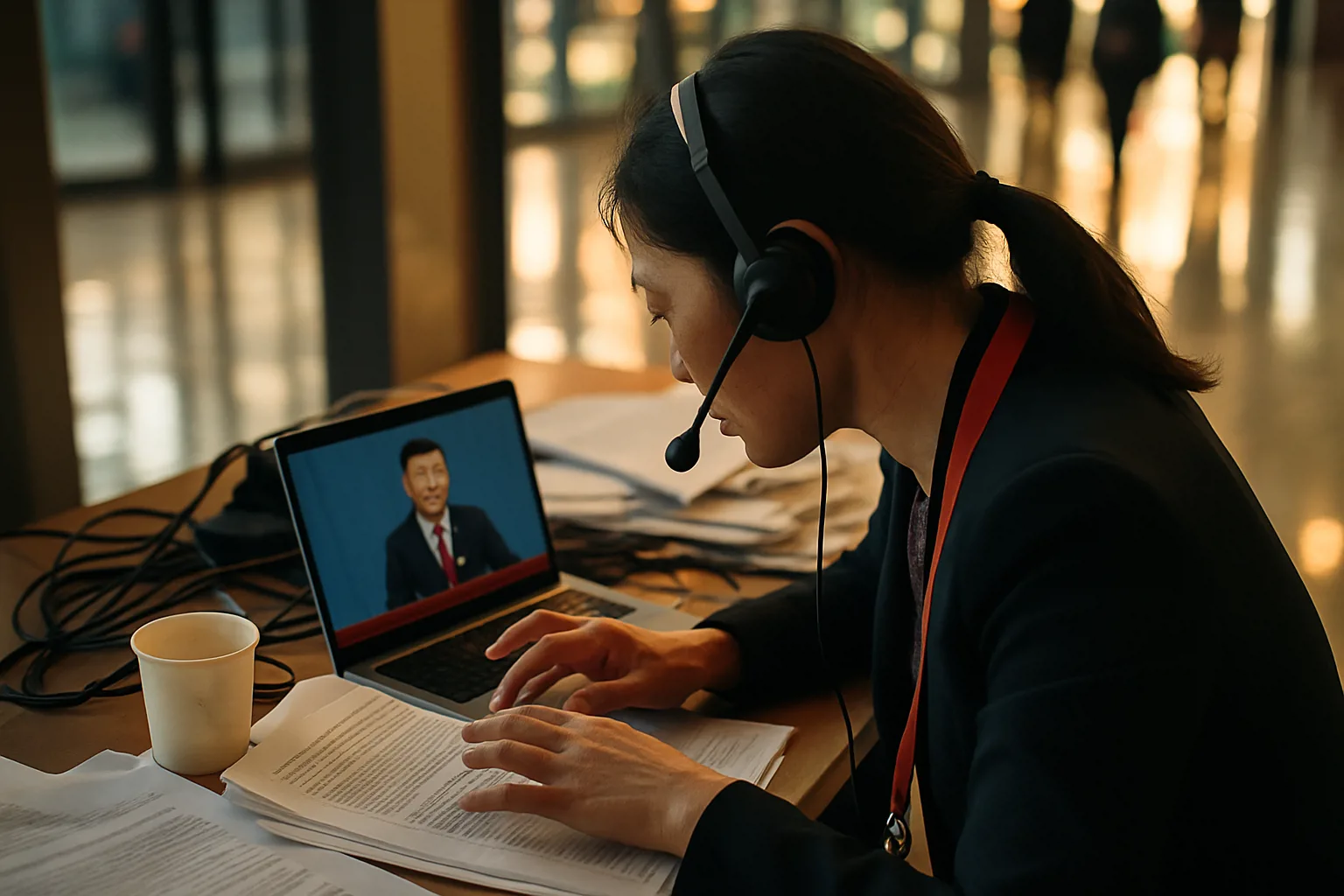
At the 2026 World Artificial Intelligence Conference, President Xi Jinping boldly positioned China at the forefront of a new global AI order, directly challenging U.S. dominance. With fresh alliances, technological breakthroughs, and pledges to empower developing nations, China is reshaping the future of AI governance and international cooperation.
- China launched the World Artificial Intelligence Cooperation Organization (WAICO) with 29 countries, rivaling U.S.-led AI alliances.
- President Xi emphasized open-source AI, global cooperation, and preventing new historical injustices in tech access.
- Chinese tech firms unveiled record-breaking AI models and infrastructure, signaling rapid innovation.
- China pledged AI meteorological tech and training to developing nations, aiming to democratize benefits.
- Xi criticized U.S. export controls, framing them as obstacles to global progress in AI.
The race for artificial intelligence supremacy just accelerated. At the 2026 World Artificial Intelligence Conference (WAIC) in Shanghai, President Xi Jinping made it crystal clear: China is ready to lead a new global AI order—and directly challenge the U.S.’s long-held dominance. Through strategic alliances, technological muscle, and a rallying call for equitable access, China is positioning itself as the standard-bearer for the next era of AI.
Xi’s Vision: Open, Equitable, and Globally Inclusive AI
Xi Jinping’s keynote address struck a chord with global audiences. He warned of the dangers of “new historical injustices” if access to AI remains concentrated in the hands of a few powerful nations. Open-source AI technologies took center stage in his vision, with an emphasis on international cooperation over competition.
- Open-source focus: Xi argued that collaborative development models are key to innovation and trust in AI.
- International cooperation: China’s call to join forces aims to prevent a fragmented, inequitable AI landscape.
- Responsible development: Xi emphasized the ethical and social responsibilities that come with AI leadership.
“We must not let new technologies create new divides or injustices. Artificial Intelligence should be a force for good, accessible to all.”
WAICO: A Strategic Counterweight to U.S. AI Alliances
In a move that sent ripples through diplomatic and tech circles, China unveiled the World Artificial Intelligence Cooperation Organization (WAICO). With 29 countries joining at launch, WAICO is designed to rival U.S.-led initiatives like Pax Silica, which focus on secure supply chains and export controls.
How WAICO Differs from U.S. AI Alliances
| Feature | WAICO (China-led) | Pax Silica (U.S.-led) |
|---|---|---|
| Membership | 29 countries (developed & developing) | Primarily G7 & allies |
| Focus | Open-source, inclusive development | Secure supply chains, export controls |
| Access | Emphasis on democratizing AI | Prioritizes national security |
| Ethics | Global equity, social responsibility | Risk mitigation, compliance |
This new organization is more than symbolic—it signals a realignment of global AI governance, giving developing nations a seat at the table and challenging U.S.-centric frameworks.
China’s AI Tech Showcase: From Supercomputers to Record-Breaking Models
China’s bid for AI leadership is backed by a surge of technological progress. At the conference, heavyweight firms like Huawei and Moonshot unveiled advances that rival anything from Silicon Valley.
- Huawei’s Atlas 950 SuperPoD: A next-gen AI computing cluster, designed for training large language models at scale.
- Kimi K3 by Moonshot: An open-source model boasting 2.8 trillion parameters—potentially the world’s largest, pushing the boundaries of generative AI.
These achievements demonstrate China’s ability to compete not just on cost or scale, but on the frontier of AI research. Open-source models like Kimi K3 aim to lower barriers for global developers, echoing Xi’s call for shared progress.
Empowering Developing Nations: Concrete Steps, Global Impact
China’s global pitch doesn’t stop at rhetoric. Xi announced bold initiatives to ensure that developing countries aren’t left behind in the AI revolution:
- Offering AI meteorological technology to 30 countries, enhancing disaster prediction and climate resilience.
- Providing 5,000 AI training opportunities for professionals from developing nations over the next five years.
- Expanding access to open-source models and infrastructure through WAICO partnerships.
These moves aren’t just about soft power—they’re about building a coalition of countries invested in China’s vision of AI. For many developing nations, this represents a rare chance to leapfrog technological barriers.
Challenging U.S. Dominance: The Tech Cold War Heats Up
Xi did not mince words about what he sees as obstacles to global AI advancement. He criticized the United States for restricting technology exports under the guise of national security, arguing that such policies stifle innovation and perpetuate global inequality.
The resulting dynamic is a “tech cold war,” with both sides building competing ecosystems:
- The U.S. tightens controls on chip and AI technology exports to China and others.
- China accelerates research, infrastructure, and alliances with the Global South.
- Both sides compete to set technical and ethical standards for the AI era.
The stakes are high: whoever leads in AI will shape commerce, security, and even geopolitics for decades to come.
What This Means for Your Business: Navigating the New AI Order
The AI world is fragmenting into distinct spheres of influence, each with its own opportunities and risks. For businesses—from startups to multinationals—this new order offers challenges, but also unique avenues for growth.
- Broader Access: Open-source models and international training initiatives can lower entry barriers for innovators worldwide.
- Diversified Ecosystems: Companies can tap into both U.S. and China-led AI frameworks, gaining resilience and flexibility.
- Ethical Leadership: Aligning with organizations like WAICO can help businesses navigate regulatory uncertainty and demonstrate social responsibility.
As the rules of global AI are rewritten, businesses that stay informed and adaptable will be best placed to thrive. Now is the moment to explore new partnerships, invest in talent, and shape your own AI strategy for the future.
Frequently Asked Questions
What is WAICO and how does it challenge U.S. AI initiatives?
WAICO (World Artificial Intelligence Cooperation Organization) is a China-led alliance of 29 countries aimed at promoting open-source AI and equitable access, serving as a counterweight to U.S.-centric groups like Pax Silica, which focus on security and export controls.
How is China supporting developing nations in AI?
China has pledged to provide AI meteorological technology to 30 countries and offer 5,000 AI training opportunities for developing nations over the next five years, seeking to close the global AI development gap.
What are the main technological breakthroughs announced by Chinese firms?
Highlights include Huawei’s Atlas 950 SuperPoD, a powerful AI computing cluster, and Moonshot’s Kimi K3, an open-source model with 2.8 trillion parameters—possibly the world’s largest AI model.
Why did Xi Jinping criticize the United States at WAIC 2026?
Xi criticized U.S. export restrictions on AI and semiconductor technology, arguing these measures hinder global AI progress and risk creating new technological divides.